Arch Stand for Balloons: Choose the Right One for Your Event
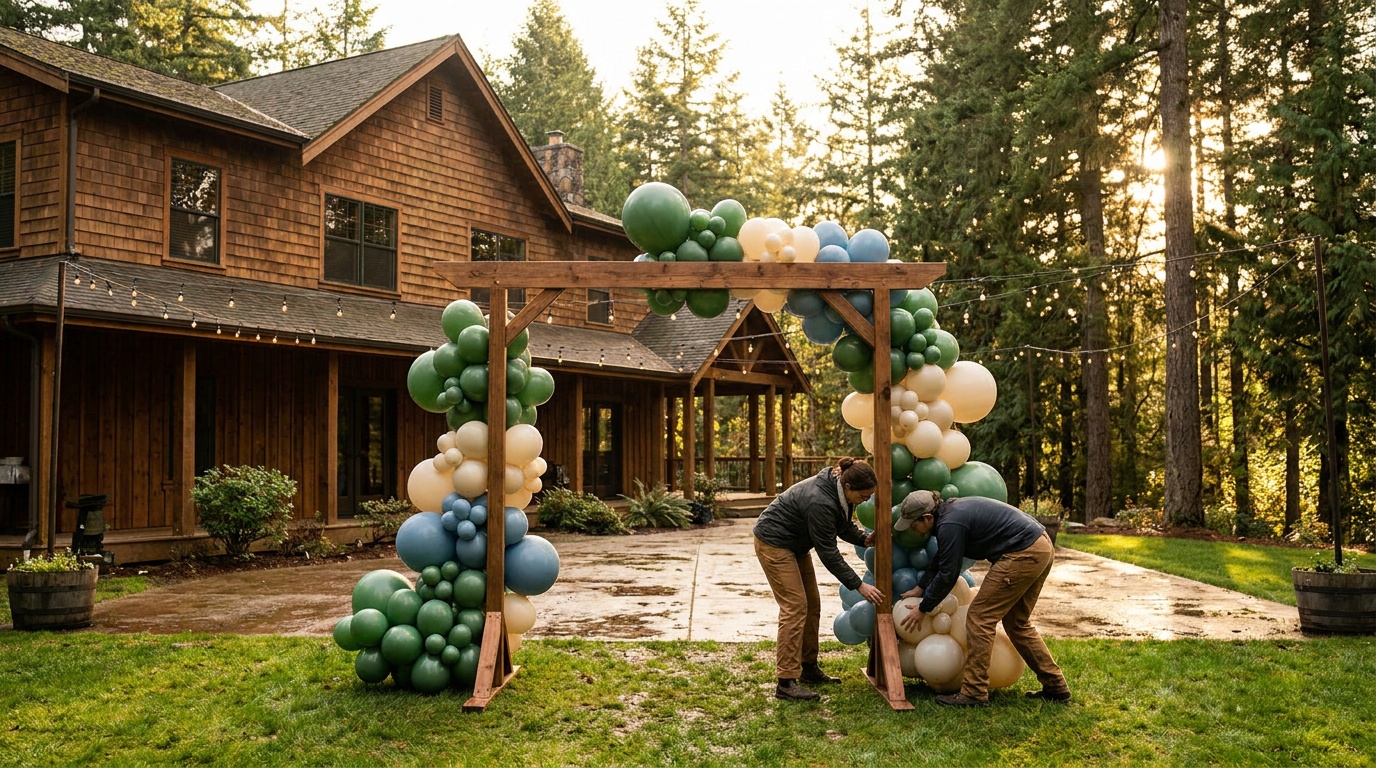
An arch stand for balloons is the unsung hero of every professional balloon installation. It's the difference between a stunning photo-op entrance and an embarrassing collapse halfway through your reception. I've been setting up these arches across Kent, Renton, Auburn, Federal Way, Tukwila, and Burien for years, and I've learned that choosing the wrong stand—or the right stand installed wrong—costs time, money, and your peace of mind on event day.
Let me share what actually works in the field.
What an Arch Stand for Balloons Actually Is (And Isn't)
An arch stand is a framework designed to hold the weight and shape of a balloon arch. That's it. But the "how" matters a lot.
Most people think an arch stand is just something to lean balloons against. Wrong. A proper stand is engineered to distribute weight evenly, resist wind, accommodate the exact height of your space, and stay stable when someone bumps it or when your 6-year-old nephew decides to play with it.
We've used dozens of stands over the years—adjustable leg stands, weighted bucket bases, weighted U-stands, and everything in between. Some are absolute garbage. Some are worth every penny. Here's what separates them.
Weighted Base Stands vs. Leg-Stand Arches
This is the comparison that actually matters when you're choosing an arch stand for balloons for your event.
Weighted Base Stands
A weighted base stand (usually a bucket or platform filled with sand, water, or concrete) sits flat and distributes weight directly downward.
Pros:
- Quick setup—ours take about 5 minutes to position and fill
- Works on any flat surface: tile, carpet, concrete, grass
- Portable and compact when empty
- Ideal for indoor events where leg spread isn't practical
- We love these for indoor Renton weddings and birthday parties where space is tight
Cons:
- Weight adds significant logistical burden (a water-filled 50-pound base doesn't move itself)
- Water can leak if the bucket cracks or if you're transporting it over rough ground
- In wind, the base provides less leverage than a wide leg stand
- You need a consistent, level surface or the stand will tip more easily
In our experience, weighted bases are perfect for climate-controlled indoor venues. They work beautifully for church ceremonies and reception halls in Federal Way and Kent where wind isn't a factor.
Leg-Stand Arches
A stand with adjustable legs (usually aluminum or steel tripod-style) spreads the weight across a wider footprint.
Pros:
- Wide stance provides exceptional stability in light to moderate wind
- Legs are individually adjustable for uneven ground
- Much lighter to transport (the base itself weighs 15 to 25 pounds)
- Legs can lock at precise angles for extra security
- Perfect for outdoor events
Cons:
- Requires more floor/ground space to set up
- Not practical in tight indoor spaces or small rooms
- Takes slightly longer to adjust legs and lock them into position (usually 10 to 15 minutes)
- Can catch on carpet or uneven surfaces if you're not careful
We use leg stands almost exclusively for outdoor weddings in Auburn and Tukwila, especially when there's any wind in the forecast. The extra footprint might seem inconvenient, but it's saved us from disaster more times than I can count.
Material Quality: Where Most People Overpay (Or Underpay)
When you're shopping for an arch stand, you'll see prices anywhere from 80 dollars to 600 dollars. That's not random.
Cheap plastic or lightweight aluminum stands (under 150 dollars) feel flimsy and often are. They flex under load, which means your arch sways. In photos, it's noticeable. On windy days, it's dangerous.
Mid-range stands (150 to 300 dollars) are the sweet spot for most professional decorators. They're heavy enough to be stable, durable enough to last hundreds of events, and portable enough to fit in a vehicle. This is what we rely on for repeat bookings.
Premium stands (300 to 600 dollars) are usually overkill unless you're running events in consistently windy locations or need extra-tall arches (10 feet or more). They look more professional, yes, but they don't perform proportionally better.
We've found that mid-range aluminum stands with locking leg mechanisms and reinforced joints are the best investment. They pay for themselves in about 15 to 20 events, and they still look brand new after 5 years of use.
Height Matters More Than You Think
An arch stand for balloons comes in specific heights. Standard sizes are 7 feet, 8 feet, and 10 feet.
Here's what nobody tells you: the arch itself isn't a full circle. It's an arc. So an 8-foot arch stand doesn't mean your arch reaches 8 feet at its highest point—it means the frame is 8 feet tall. Your balloon arch will be slightly shorter depending on how you build it.
For most indoor venues in Kent and Renton, an 8-foot stand works perfectly. You want a minimum of 12 inches of clearance between the top of your arch and the ceiling. If your venue has a 9-foot ceiling, don't use a 10-foot stand.
For outdoor events with no ceiling constraints, a 10-foot arch commands attention and photographs beautifully. We use these for large weddings and corporate events in Auburn and Federal Way where there's space to accommodate them.
A 7-foot stand is usually too small for anything except tight corner placements or very small gathering spaces. We rarely spec these unless a client has serious space constraints.
Wind Is Your Real Enemy
I've seen professionally designed arches collapse not because the stand was defective, but because someone underestimated wind.
Here's what we've learned: even 10-mile-per-hour wind can shift an improperly secured arch. At 15 to 20 miles per hour, you're looking at potential failure if you're relying on the stand alone.
For outdoor events, we always secure arches with guy lines—thin ropes or cables anchored to the ground or to weights positioned away from the arch footprint. This isn't optional at outdoor weddings in Tukwila or Federal Way where wind can pick up without warning.
Indoor events don't require this precaution, but we still double-check that the arch can't be easily moved by someone walking past it.
Our Recommendation: Which Stand to Choose
If you're booking a professional balloon installation service (and you should be—DIY setups are how accidents happen), your decorator will choose the right stand for your space and conditions.
For your own reference:
Choose a weighted base stand if:
- Your event is indoors
- Space is limited
- You don't have wind concerns
- You want the fastest possible setup
Choose a leg-stand arch if:
- Your event is outdoors
- You have at least 6 feet of clearance on all sides
- Wind is a possibility
- Stability is your priority
Book a professional if:
- You're unsure about your venue's requirements
- Your event is high-stakes (wedding, corporate event)
- You want the arch to photograph beautifully
- You don't want to worry about it
We've built balloon arches in every condition you can imagine across South King County—from tight indoor ceremonies in Kent to sprawling outdoor gardens in Auburn. The stand you choose is the foundation of the entire installation. Get it wrong, and your arch fails. Get it right, and you've got a stunning focal point that lasts the entire event.
Get in touch with Balloon Decor NW if you need guidance on the right setup for your venue, or if you're ready to book a professional installation. We'll handle the stand selection, setup, and breakdown—all you do is enjoy your event.